

I’ve personally been a Ubiquiti customer for about 14 years. I run Ubiquiti in small businesses and even in my day job office building. I, originally, started with their P2P gear then moved into routing, switching, Wi-Fi, cameras, IOT sensors, doors, digital displays, audio/video gear, phones, and now SANs.. with my sights looking at Electric Vehicle charging stations and beyond. I’ve was even interested in their now dead solar panel product line but could never quite justify it before it was killed.

I’ve been mulling over this blog post for the past couple years since MFD12. When Ubiquiti directly discussed their Enterprise readiness at Mobility Field Day 14 back in May, I figured it was time to finally address it. This has been the most difficult that I’ve had to write because in someways I see they are there.. then others I’m still holding back.
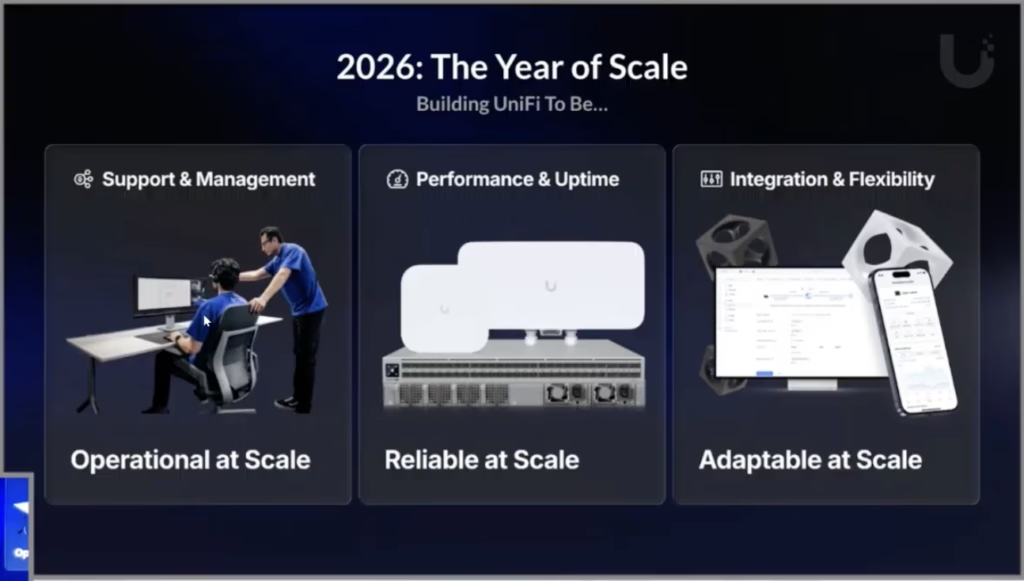
First off, Small/Medium Business/Enterprises is not who I’m talking about here. We all know someone that has deployed Ubiquiti in a small medium business and it’s functioning well. That niche is well established as being square in the crosshairs of a Ubiquiti install excelling.
Where this blog post is exploring is beyond these SMB/SMEs. Are Ubiquiti products and their “No licensing” model fit for larger enterprise and universities? Or does these larger organizations just need to keep paying for their ongoing licensing fees as status quo? That is the big question.
How do we measure Enterprise Readiness?
Right after MFD14 back in May, I saw this posted to LinkedIn. So I’m an amateur for using Ubiquiti gear?

At my day job, I support and use these products from everyone one of those vendors mentioned. I support schools and often budget constrains win out on what is selected. I have schools using those products.. granted education gets massive discounts compared to the private industries.
This is has been the most difficult question to quantify since I started thinking about this post.. What constitutes Enterprise Ready.. and what distinguishes an IT Expert from an amateur?
Ubiquiti makes that distinction much harder to put into words because they are sitting in a market and playing on both sides of the fence.
First example is how Ubiquiti has brought cheap 10gig switching and routing to the masses and are following suit with 100gig. That’s a pretty compelling option if you need something that runs 100gig where the competition can easily quadruple in costs. Remember these is no licensing costs, so you buy a 100gig switch at $2-5k a switch and that is what you pay for the lifetime of the switch. That’s brilliant marketing and why people are gobbling up Ubiquiti gear left and right.
Then you have something like this:
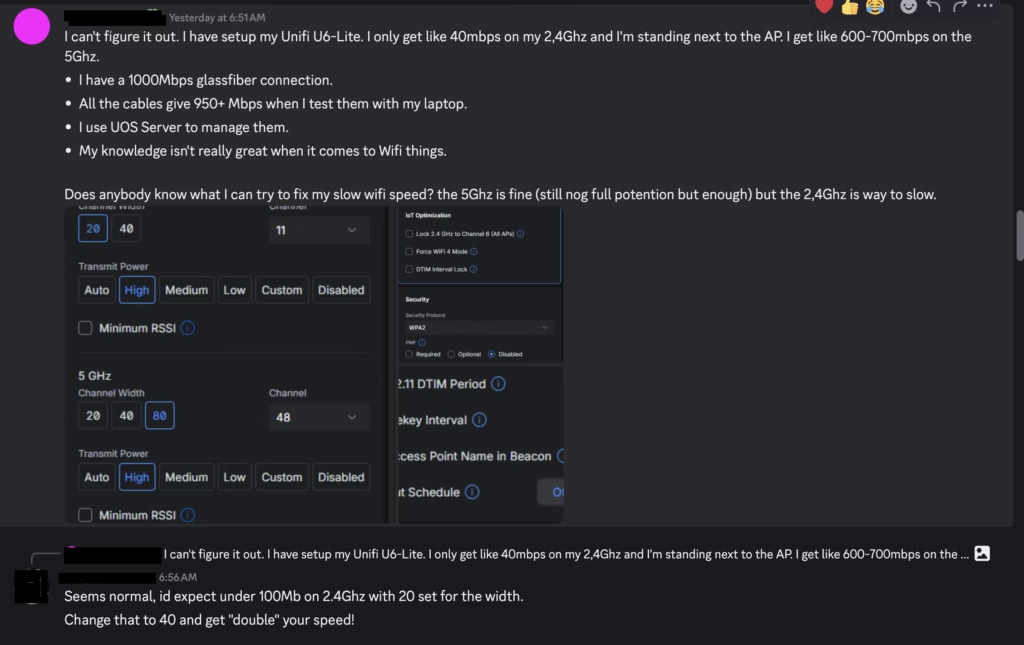
Just the other day, I saw this post on a Ubiquiti forum. I mention this, not for the person asking about getting 40mbps on 2.4Ghz, but for the reply suggesting the ability the person should “Change that to 40 and get ‘double’ your speed!” 40MHz wide channels in 2.4GHz should be banned from anyone’s vocabulary. That just breathes of amateur.
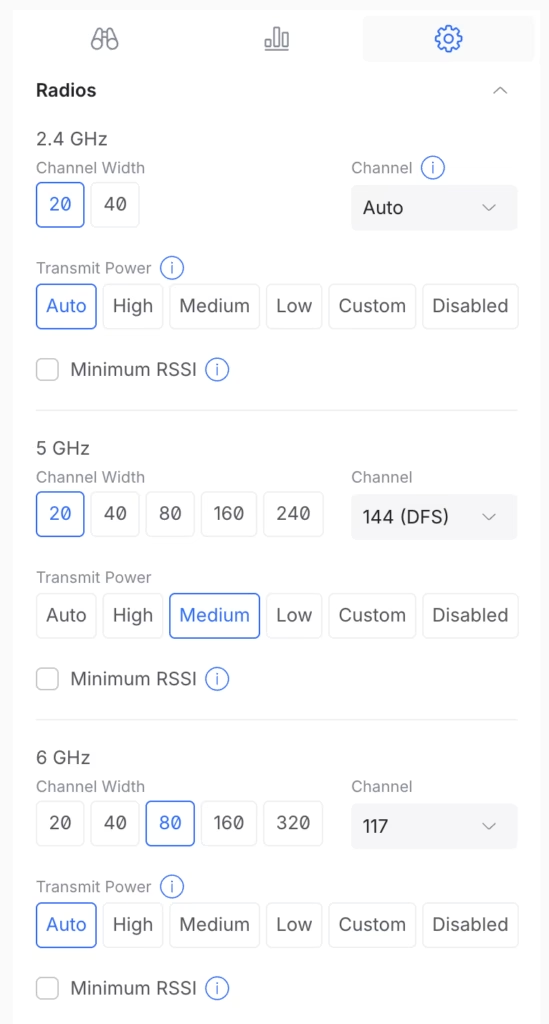
The same goes for the ability to set the 6GHz radio to a 240MHz wide channel that isn’t even standards based and only a few androids support it. These are the types of things that Enterprise know to not use ever. This is purely a feature for a home or small business. Most of the IT Expert supported vendors mentioned above don’t give you these options in the software. Is that Enterprise ready or just supporting both sides of the market? I’m still on the fence.
Personally, for an Enterprise there is certain gear I would recommend over others. That gear is still at a discount with the no licensing fees but it’s not the bottom of the barrel offerings on Ubiquitit’s store either.
For example, I would only install the Unifi E7 line or U7 Pro XGS line of Wi-Fi APs, with an exception of the U7 Pro Max, in an Enterprise or school environment. The reason being.. the Dedicated Scanning Radio. All the comparable vendors are including a scanning radio in their enterprise AP models. If you’re building a network that has a higher level of requirements, then don’t go for the Lite or even the Pro series APs. Leave those for the home or maybe a small office. Same goes for their switching and firewall/routing products.
Stuck on Ubiquiti

At Mobility Field Day, Andrew Pieper talked about how Ubiquiti gear is sticky. He said:
“If you happen to sell UniFi as a business, you’ll find once you sell to a customer, it’s an extremely sticky product. They’re often it’s so much easier to sell them more products in the future because they have a good experience. They think, Oh well this actually was pretty affordable and it worked really well and it’s got great features. And so it becomes that much easier to sell them on other products and you’ve lowered the barrier of entry for those other products you could add on.”
Andrew Pieper https://www.youtube.com/watch?v=sZKn8KfJJ5o
Remember my list of Ubiquiti products I’m currently running? This is absolutely true. I know many people who are running Ubiquiti in their homes and small business.. then see how the cameras function, then keep adding. Could someone buy Ubiquiti then find that it’s not working for them and go buy something else? Absolutely. Does it happen very often? Not really.
Creating Standards
For years, Ubiquiti gear was non standardized when it came to POE. Ubiquiti 24v POE was the common denominator and it frustrated so many people playing with Ubiquiti gear. I had to plug in injectors to use gear unless I went Ubiquiti switching.
Fast forward to today and the proprietary POE standards are still with us.. kind of. Today, it shows itself in marketing calling POE+++ a standard.. which doesn’t exist. POE++ does and from a perspective, Ubiquiti POE+++ is just a continuation of that. The 60 and up to 90 Watt POE options that the industry just called POE++.
This was a point asked during MFD14. What about naming issues. Ubiquiti likes following Apple when it comes to names. Product lines like Pro and Ultra are prevalent. Then don’t get me started with the packaging. The founder was a former Apple guy after all.
When breaking into an established market such as the Enterprise world, bringing your own standards that are not agreed upon by everyone makes you look like you have egg on your face. It works for a SME or home user that sees the iteration of the standard to what you are building. Less so in the enterprise world. I think the focus of calling Ubiquiti gear amateur comes from this very reason. They are hitting on a market that is established and the big boys are not happy about it. You could say you’re disrupting the market but for what purpose?
We Don’t Need No Stinking Licenses
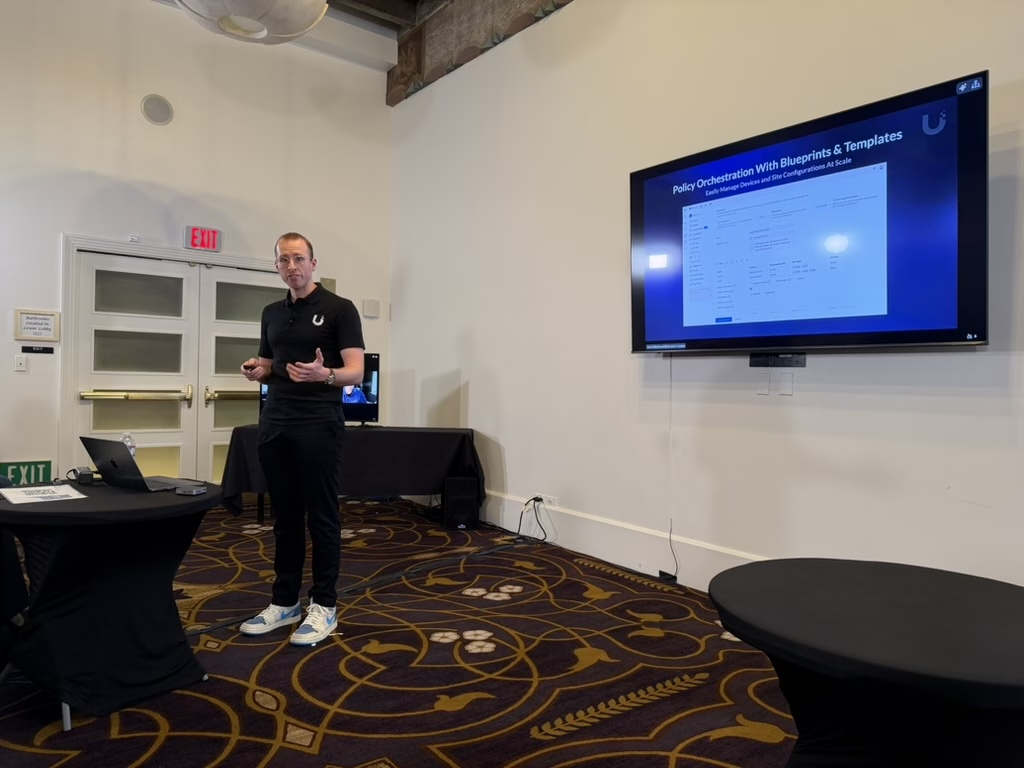
This is where Ubiquiti has found their marketing strong point but in this argument it comes back to bite them a bit. When Ubiquiti first came to MFD back at MFD12, this was probably their biggest announcement of the whole presentation. They announced that they were building a Paid Support tier service. Previously, if you wanted support outside of an RMA of a device, you’d have to dig through community and forum posts and get help from other users. This announcement supposedly changed that.
Where other “IT Expert” vendors succeed with this is they have licensing but with that licensing you get premium support features backed in. Ubiquiti gives away their products with no licensing but has a support fee based system if you need it. There has been a lot of complaints about that support for years. This is changing. Personally, I usually buy an extra switch or stand up a High Available router/firewall at these prices so protect myself from support failures. Sometimes it could be faster to just buy a new product than go through support. That is something Ubiquiti thrives on, but is that Enterprise ready? You results may vary.
Out of Stock
That leads to the next biggest discussion around the Enterprise readiness of Ubiquiti, is a product going to be in stock when I need it?
We all watched the industry flounder during Covid because no one could get stock of products with lead times being in the months if not years. Luckily most of those days are behind us, but Ubiquiti continues to have a bit of problem with this. Have a specific product that you need to replace tomorrow? Well, it may be out of stock in the Ubiquiti store.
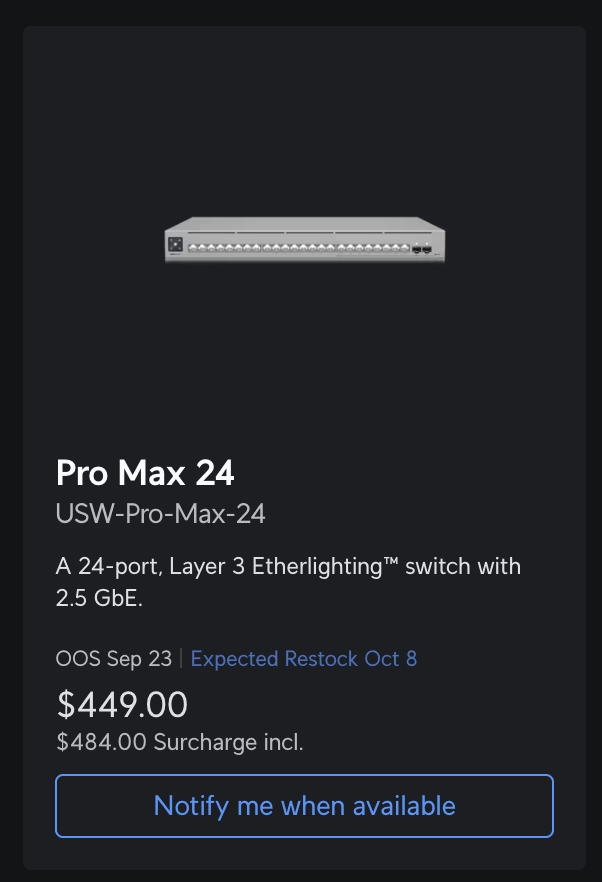
Take for example this Etherlighting 24 port switch. It’s currently out of stock and says it will be restocked on October 8th. That Restock date hasn’t always been there which has cause a lot of frustration around the Ubiquiti store.
This is very common. The worst are these type of Restock notifications.. No Restock date yet.
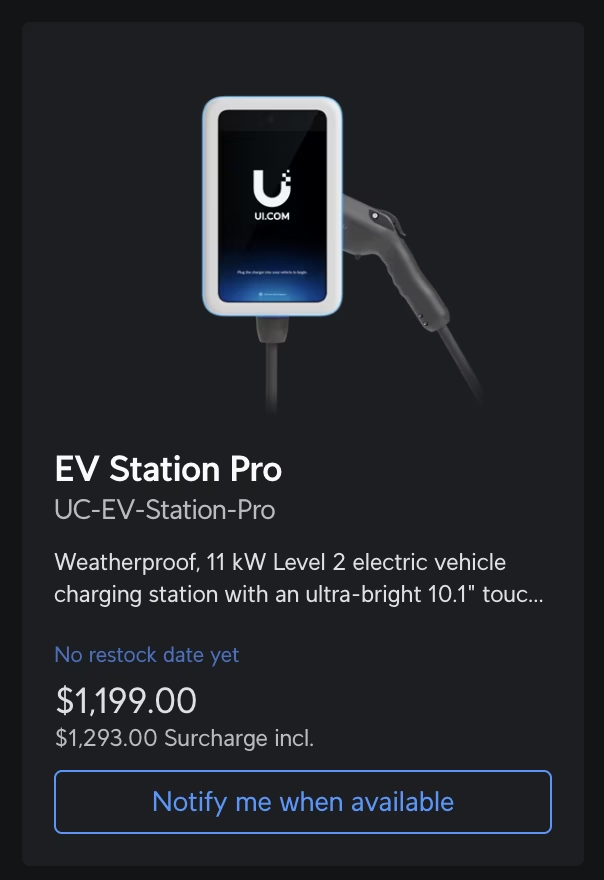
If your Enterprise is relying on this very product, you’re kept waiting like everyone else. When it comes to these scenarios with other “IT Expert” level vendors, Enterprises are usually working through a third party reseller that has vendor partnerships and can pull some strings if things happen.
Ubiquiti on the other hand, sells direct as well as through resellers. But those resellers typically have to either mark up the products to prices that are way higher than buyers can get directly from Ubiquiti (the margins are extremely thin with Ubiquiti). Or they make their money providing other services such as installation and ongoing monthly support contracts. That is something SMEs deal with regularly but not the larger Enterprises. At MFD14, Ubiquiti announced a new UniFi Partner Program.
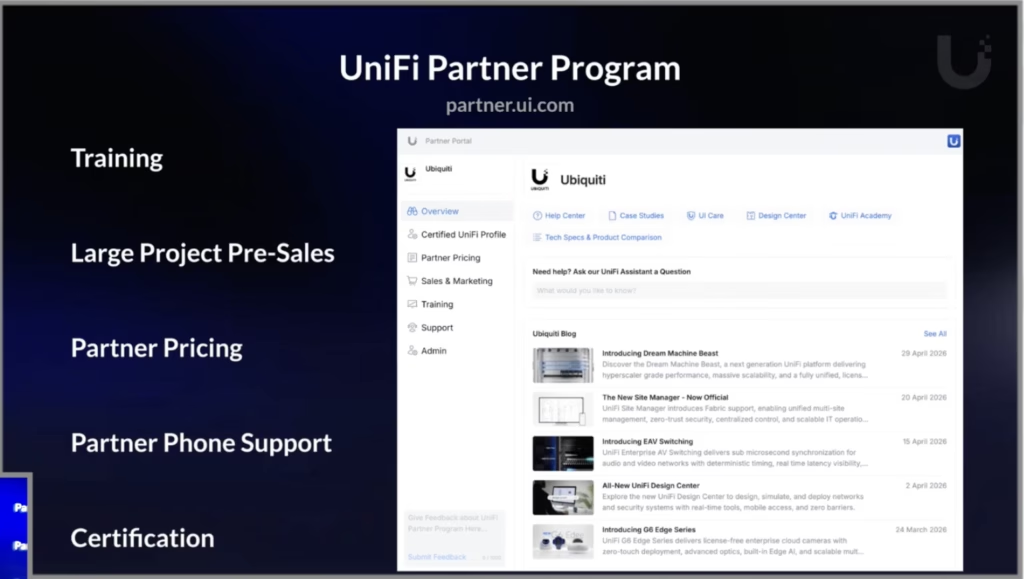
Because of these small margins, I’ve heard from friend that reselling Ubiquiti just isn’t worth it. For your larger Enterprises is that a benefit or a drawback? That takes some deep thinking at the leadership level.
To be fair, Andrew does addresses the stock issues at the end of the MFD14 video.
Enterprise Focused Ubiquiti
None of these arguments are entirely for or against Ubiquiti being Enterprise ready. Your definition may differ just like that post on LinkedIn. You may think using Ubiquiti is the worst thing an Enterprise could do or you may be embracing the cost savings of installing Ubiquiti gear and ripping out the IT Expert level gear from other vendors.
Where else does Ubiquiti need to go to reach that desired Enterprise ready status? Well, I think they need to look to what everyone else is doing. Have a training program or some kind to certify installers.
Additionally, I think Ubiquiti still has a trust issue boiling to the surface. Is your gear going to keep running and supporting my mission critical production line. What happens if it doesn’t. Ubiquiti still doesn’t quite have that answered fully. And additionally, their push to be like Apple need to included the monikor that makes Apple who they are, Quality. Everyone can build an Android product that works, but not everyone wants to go the extra mile to build the quality piece. Ubiquiti has it when it comes to their UI’s looking polished. Configuring a Ubuiquiti device is quality from a design perspective. But run it for a few days, and you’ll notice under the hood isn’t quite so solid.
I think these three things are where Ubiquiti needs to focus next on their journey to the Enterprise market. Once achieved, the amateur label may come off for more enterprises.
I fully see Ubiquiti continuing to make a push for more and more Enterprise market share at the expense of the Ciscos and Fortinets. Will they become the juggernaut of competing with Cisco in that space, I doubt it. But quietly, they’ve built quite the nest egg that is doing just that, just for the spaces the Cisco didn’t want to address, squarely in the SME space.
At MFD the last few years, Ubiquiti’s marketing has constantly been that they are Enterprise ready. As I mentioned at the beginning, I’m still on the fence for certain reason. Am I using Ubiquiti more in my spaces where it makes sense? Absolutely. But it’s a very strategic approach instead of a rip and replace model.
Should I use Ubiquiti in my schools at my day job? I’m maybe getting there. But there is more to test before I make that leap. I know tons of charter schools and even school districst around the country that utilize Ubiquiti gear across their network. But does that come with some extra work in troubleshooting? That is yet to be determined.
I think at this point, I’m still holding my breath to jump fully in the Ubiquiti, no licensing, bandwagon. I would love to be there with the budgets of a school, but I’m also a realist and look at the day to day problems on my network.
I ask myself, can Ubiquiti solve them? Mostly.. Is that enough? Not quite, but I need to mind that gap because it’s getting smaller every Mobility Field Day that Ubiquiti presents at. So my analysis is to be determined. Me and a few hundreds of thousand Ubiquiti fanboys will be sure to keep watching this space.